
Barcelona, in brief
The swinger capital of southern Europe
A scene defined by geography
The prestigious zona alta houses
The accessible central clubs
Who gets in
“Barcelona has always been very libertine, with the character of an open metropolis, a port city.”
Barcelona's lifestyle scene splits cleanly in two, and the split is geographic before it's anything else. Up in the zona alta sit the prestige houses, couples-led and discreet to the point of invisibility. Down in the central Eixample sit the working clubs, open most nights, easier to reach, and far more forgiving about who walks in. Where you start depends entirely on who you're arriving as.
The legal footing is calm. Consensual partner-swapping among adults is legal in Spain, and the liberal-club model — you pay for entry and drinks, not for sex — sits outside the criminal law. The Spanish press has described the lack of a specific statute regulating these venues as a regulatory gap, not a prohibition. The practical risk in Barcelona is logistical, not legal: it's Europe's pickpocketing capital, so the real advice is mind your bag on the metro and take a taxi to the zona alta late at night.
Barcelona has always been very libertine, with the character of an open metropolis, a port city.
That line, from Crónica Global's profile of the scene, is doing more than scene-setting. The city's openness is old and structural, and proximity to France — where the modern movement took shape — helped make Barcelona a European hub for it.
The two Barcelonas
The houses and the clubs are different products for different nights. Read the door before you read the website.
| Venue | What it is | Who gets in | Good to know |
|---|---|---|---|
| Oops! (Sarrià–Sant Gervasi) | Restored modernist mansion, outdoor pool, rooftop terrace | Couples-led; limited single men by same-day WhatsApp; Saturdays couples-only | The flagship. ~€40 midweek / €70 weekends per couple |
| Training Pedralbes | Ultra-private three-floor villa, pool and jacuzzi | Members only; states plainly that men alone aren't admitted | A man enters only as a female member's guest |
| Libert (Sant Antoni) | Central, no-frills, open every day of the year | The city's most single-male-friendly door | The default first stop; ~€26–40 |
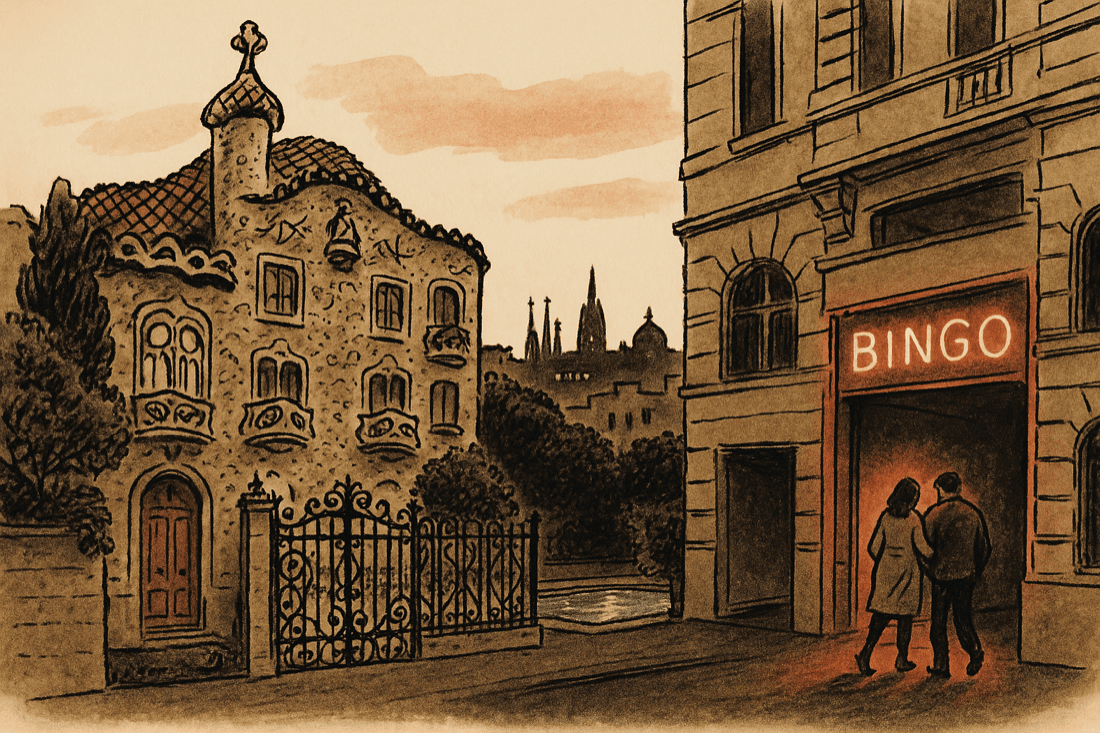
| Open (Esquerra de l'Eixample) | Central club with a BDSM dungeon downstairs | Single men admitted on a capped basis, at a premium | Discreet second entrance through a bingo-hall car park on Urgell |
| Sauvage (Les Corts) | Newer 1,000 m²+ club with a shisha lounge | Couples and single women only | Run by ex-hospitality couple Ana and Carlos; weekend-led |
The clientele skews couples and single women and is predominantly heterosexual. The crowd-sourced scene map cited by Crónica Global puts it bluntly: about 95% of attending men are straight, while women split fairly evenly between straight and bisexual. Same-sex couples are scarce. Single men should plan around this rather than against it — turned away at Training Pedralbes and Sauvage, admitted in limited numbers at Oops!, and admitted at a price at Open or freely at Libert.
What the scene actually feels like
Owners describe the register as deliberately unhurried. At Sauvage, Ana and Carlos frame the house philosophy as respeto y diversión and say they see less conflict than in conventional nightlife, because cada uno marca su propio ritmo — everyone sets their own pace. That "no pressure" tone is the through-line across the better venues, and it's reinforced by the strict no-photos, phones-away norms that hold inside.
The community frames the lifestyle as sexual polygamy but emotional monogamy — open at the edges, closed at the center.
Myth: Barcelona's swinger clubs are a downtown party district anyone can stumble into. Reality: The flagship houses are residential, unmarked, and couples-led — Oops! and Training Pedralbes sit up in the wealthy zona alta, and Open hides a second entrance inside a basement car park. Per Crónica Global, most venues don't admit unpartnered men at all.
For a visitor, the move is simple. Decide who you're arriving as, pick the venue that matches, bring photo ID (minimum age 18), and book ahead where you can. Spanish is the working language; Catalan and English are widely understood at the better-known doors. Dress smart rather than formal, and check the themed nights — lingerie evenings and nude afternoon sessions are common and change the room entirely.
Communities
Groups, forums and meetups in Barcelona.
Meetup group for ethical non-monogamous relationships that screens applications before you join.
Where to look
New to the lifestyle?
First time?
Learn how the night flows, what to wear, and the etiquette that keeps everyone comfortable.
On the map
⚲ Approximate — exact addresses shown to membersClubs open tonightClubs, other nights
View larger map ↗Clubs in Barcelona
Clubs in Barcelona
View all 4 →Swinger club on Carrer de Sepulveda, Barcelona, open every day of the year
Swinger club in a renovated modernist house in Barcelona; 21+
Swinger club in Barcelona's Eixample, open since 2004 over two floors
Swinger club in Barcelona; couples and single women only
Swinger club in Barcelona
Etiquette & law
- Legal age is 18+; bring government photo ID.
- Legal status: Legal. Clubs operate as private, members-only venues.
- Consent is explicit and ongoing. Always ask; no means no.
- Photography is prohibited inside almost every venue.
- Consensual partner-swapping among adults is legal in Spain: prostitution is never a crime for the person who practises it, and the swinger ('liberal') club model - where people pay for entry and drinks, not for sex - sits outside the criminal law. What the Spanish Criminal Code does punish is coercive or exploitative third-party conduct: Article 187 penalises forcing someone into prostitution or profiting from another person's prostitution (even with consent), and Article 188 covers prostitution involving minors or persons with disabilities. The minimum age is 18 (Spain's age of majority); venues are ordinary licensed hospitality businesses that serve alcohol. There is no specific national statute regulating swinger venues themselves, which the local press has described as a regulatory gap rather than a prohibition.